Finance Train LogoFinance Train
Learning LibraryTemplatesBlog
Data Science Bundle
Finance TrainFinance Train
Learning LibraryTemplatesBlog
Data Science Bundle
Lesson 7 of 30

Purchase Method of Accounting for Controlling Interest Investments or Acquisitions

Under the purchase method, the assets and liabilities of the acquired company are combined onto the financial statements of the acquiring company at fair market values on the transaction date.
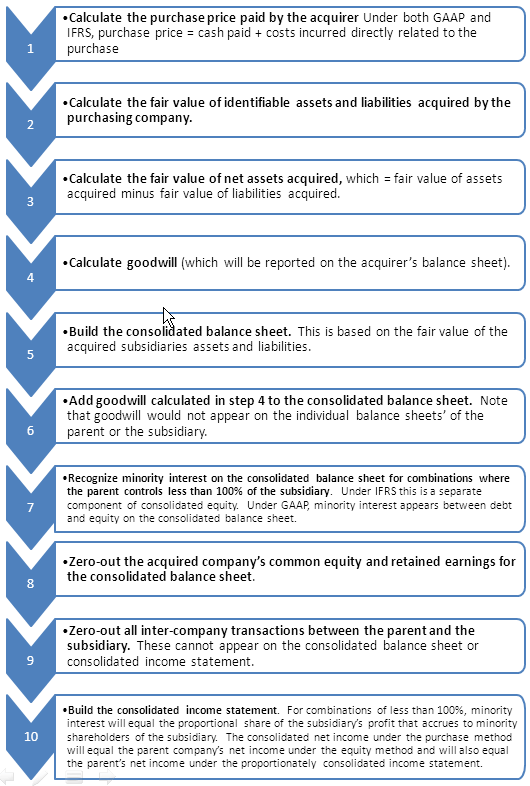
Steps in the purchase method (note that the process starts with the balance sheet and ends with the income statement):

NOTE: The process of creating a consolidated balance sheet and income statement through the purchase method is time consuming and requires practice.  Candidates are advised to begin by practicing problems with notes and books available and gradually building proficiency to the point of successfully completing the process without assistance.

Previous Lesson

Controlling Interest Investments: Accounting for Business Combinations

Next Lesson

Pooling of Interests Method to Account for Controlling Interest Investments

Back to ebook

Financial Reporting Part 2

30 lessons

Lessons

1
CFA Level 2: Financial Reporting Part 2 – Introduction
2
Intercorporate Investments Accounting - Ownership Categories
3
Minority Passive Investments – Accounting Classes
4
Minority Active Investments and the Equity Method for Financial Reporting
5
Joint Venture Investments
6
Controlling Interest Investments: Accounting for Business Combinations
7
Purchase Method of Accounting for Controlling Interest Investments or Acquisitions
8
Pooling of Interests Method to Account for Controlling Interest Investments
9
Purchase Method vs. Pooling of Interest Method
10
Acquisition Method to Account for Controlling Interest Investments
11
GAAP Purchase Method, IFRS Purchase Method, and GAAP Acquisition Method Accounting
12
Variable Interest Entities (VIEs) and Special Purpose Entities (SPEs)
13
Defined Benefits Plans vs. Defined Contribution Plans
14
Measuring the Defined Benefit Obligation
15
Pension Expense (both GAAP & IFRS) for the Income Statement
16
Defined Benefit Plans & the Company Balance Sheet
17
The Role of Actuarial Assumptions in DB Plan Accounting
18
Economic Pension Expense
19
Pensions and the Statement of Cash Flows
20
Accounting for Stock (or Share) Based Compensation
21
Financial Statement Consolidation of Multinational Operations
22
Consolidation: Presentation Currency vs. Functional Currency vs. Local Currency
23
Foreign Currency Translation
24
Temporal Method for Translation of Foreign Statements
25
Current Rate Method for Translation of Foreign Statements
26
Consolidating Financial Statements: Determining the Functional Currency
27
Translation Methods and Financial Statement Effects
28
Accounting for Subsidiaries in Hyperinflationary Economies
29
CFA Level 2: Financial Reporting 2 - Recommendations
30
MBS Weighted Average Life
Finance Train

Learn data science and AI skills for finance through practical courses and tutorials.

Learn

  • Learning Library
  • Course Directory
  • Blog

Resources

  • Templates & Downloads
  • Tools
  • Tables
  • Calculators

Company

  • About
  • Contact
  • Privacy
  • Terms

© 2026 Finance Train. All rights reserved.